
 Looking back on the history of my work in the blog world, I have found that every year around this time I tend to write about a sport I sometimes love to hate: golf. So, without further ado, it is time for my yearly “golf blog,” where I share a few insights from a hack’s viewpoint that will hopefully lead to some success in your game. If you play this frustrating yet beautiful game, you know that every round can either be 4 hours of bliss, or contemplating why you spent so much money on those clubs. And maybe that’s what makes the game so special for so many, the never-ending battle between good and evil (thoughts, that is).
Whatever it is that keeps you coming back to the links, obviously you want to play the best you can and as long as you can. The proper warm-up for any type of fitness or performance activity has been spoken and written about by countless fitness pros, yours truly included, but I would argue it’s super important to your game and your health to talk about warming up before you tee it up.
Before the Course
If you are like me, sometimes you get to the course with only a few minutes to spare before your tee time. Here are a few strategies you can implement that don’t take a lot of time and will benefit both your game and your body.
- Be fit: Okay, I lied, this one does take some time, but being fit and healthy before taking on any activity is imperative to maintaining your health. I think we would all agree it might be foolish to hop into a 5 v 5 pickup game on the basketball court if you have been on the couch for the last three months. You would want to work on your cardio, power, and endurance so that you can compete and enjoy the activity. Same goes for golf. Don’t let the cart fool you: it is a physically demanding game—if you wish to compete with your pals, that is. So, take care of yourself and make sure you are getting that minimum 150 minutes per week of moderate to vigorous exercise recommended by the ACSM.
- Soft-tissue work at home: If you have time before hitting the course to hit the foam roller, I highly recommend it. Spend some time on the glutes, lats, adductors, T-spine, and hamstrings. (link)
On the Course and in a Hurry
Here are some videos that demonstrate some important warm-ups and drills.
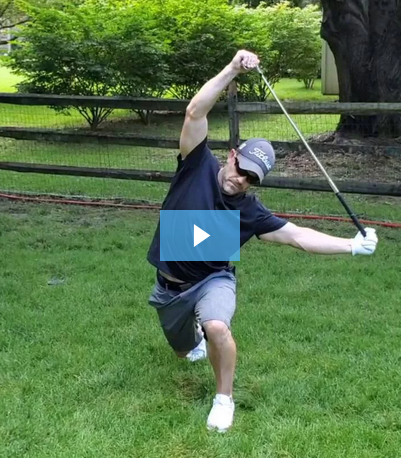
- Increase Tissue Temp: Walk, small plyometrics (jumping jacks), light jog
Drills:
- Chest Stretch
- SA OH Reach
- Club windmills
- Reverse Lunge with Lateral Reach
- Lateral Leg Swings
- Trunk Rotations (iso)
- Back and Down Swings
Now, there may be a few things holding you back from completing a proper warm-up before enjoying a great day of the oldest game. You may not show up to the course in time. I make time to get there early to get outside and really begin the round before the first tee. You might feel a little “goofy” going through a proper warm-up in front of your friends. To that I say, “success favors the prepared,” and you can show them drills after you beat them on the course, or are able to play again immediately without soreness, or carry the bag for 18 holes and remain upright. A proper warm-up may not get you on tour, but it may save you a few strokes aside and keep you playing longer.

This blog was written by Tony Maloney, ACSM Certified Exercise Physiologist and Health Fitness Instructor. To find out more about the NIFS bloggers, click here.
 Often I ask my clients or athletes why they exercise. The most common answers that I get from them are “because I want to look better” or “for good health,” which are great reasons for sure. But what if I told you that exercise helps one of the most important organs in your body that doesn’t include any visible muscle:
  Seriously. Stop and take a breath. Don’t judge your technique, just breathe in and out. Failure to do both in and out will likely result in you fainting, and the ERs and urgent care centers have enough to do without you coming in with a cut forehead requiring stitches.
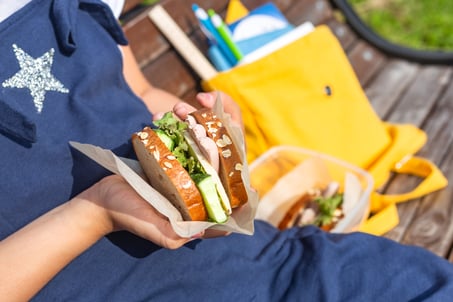 As many of us are confronted with the decision of whether to send our children back to school or continue with online learning, we are faced with many questions that we had never had to ask ourselves before. Breakfast, lunch, and often snacks are mainly consumed during these hours at school, so as we continue to see Indiana trying to return to normal and reopen, we might need to tailor our eating habits to ensure we are not risking unnecessary exposure to COVID-19 when refueling our bodies throughout the day. These ideas also work for adults who are returning to the workplace or have already returned to the workplace.
 The uncertainty of the last few months has taken a toll both mentally and physically on everyone. Many people did not have access to gyms and instead did at-home bodyweight workouts or
  Last time
 “Take a probiotic; it helps with your gut.” We have all heard it from friends, doctors, and Registered Dietitians. Is it really that simple, though? It is no secret that probiotics really do help with a variety of gastrointestinal (GI) issues. However, did you know that there are specific strains of probiotics that help with specific symptoms, and while one strain may help with one GI symptom, it may not help with another? Not all probiotics are created equal, and not all supplements labeled “probiotic” will yield health benefits.
 Dietary supplement usage is reaching an all-time high. The
  For whatever reason, there seems to be this notion in the fitness industry that if the workout doesn’t leave you on the ground gasping for air, it really wasn’t a good one. Or maybe that you didn’t work hard enough because you didn’t go running to the nearest trash can by the end. This could not be further from the truth; but unfortunately this way of thinking still seems to run rampant.
  It’s safe to say that 2020 has been one a heck of a year (and it’s barely half over!)—the good, the bad, the ugly. At times, it’s felt as if an entire decade has passed. No matter how you slice it, the fact that we’ve experienced something as novel as a global pandemic still feels weird to say, think about, and sometimes fully appreciate. It has been a tumultuous time outside of COVID-19 as well, and every person has had a unique experience, a unique perception, and unique challenges along the way.