 Every four years, the Winter Olympics shows up, and we are in awe of some of the most gifted athletes on the planet. Ice skaters gliding upon an edge like a razor blade, yet choreographed to music. Bobsledders who risk near death contently as they barrel through corners (mortals, like myself, need not apply). And the cross-country skiers boast some of the highest aerobic capacities of any athlete in the world. For the majority of us, riding down a hill on an inner tube does the trick, but that doesn’t mean we can’t infuse your workout with the tools to not only get a great workout, but dream for gold!
Looking around the fitness center, finding options to get into Olympic shape isn’t too difficult. With a little imagination, you can add these three exercises to your workout today with little or no skating, skiing, or bobsledding experience. Now get ready for the NIFS Winter Olympic Special: Going for Gold!
Helix Lateral Elliptical
If you want powerful legs, endurance, and balance, you might want to take a look at speed skating. Not unlike its summer Olympic running counterpart, speed skating requires a lot of practice. To accelerate, the skater pushes side to side, arms working to not only balance but also propel the body forward.
To simulate this motion, the Helix Lateral Elliptical allows you to safely perform the lower-body movement used in speed skating. Being able to do this exercise year round in the friendly confines of NIFS is a definite bonus. A built-in console allows you to track intensity and time. A quick Tabata (:20 on, :20 off) for 5–8 rounds can give your workout a nice lift. Be sure to try both directions!
Concept II Ski Erg
 The concept of cross-country skiing for sport comes from areas in which getting around is easier and more common on skis than trudging through the snow. Out of necessity and the evolution of transportation, people in the Nordic region of Europe are now famously known for producing some of the highest VO2 Max numbers in the world. Your VO2 Max is the quantification of how efficiently your body uses oxygen when you exercise.
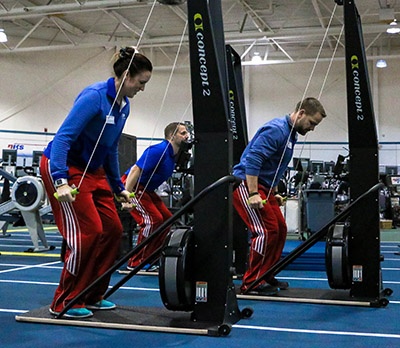
With that being said, how can you get similar exercise without all the snow or burden of buying skis? Concept II, the company that makes rowing machines, designed a vertical rowing machine that can simulate the upper-body cross-country skiing pattern. Like the Helix, there is a console to track your progress, intensity, and time. Once you get the hang of the Ski Erg, you can see how far you can get in 60 seconds, rest, and then do it again!
Prowler Sled Push
 One of the most fascinating events at the winter Olympics is the bobsled. A team of individuals, working as one, propels a bobsled down a narrow, icy chute. To get the sled going, the team relies heavily on otherworldly leg strength. The rest of the event takes skill and some luck, as this is a race to the finish line. The winning team usually has a complete balance of strength, skill, balance, and weight.
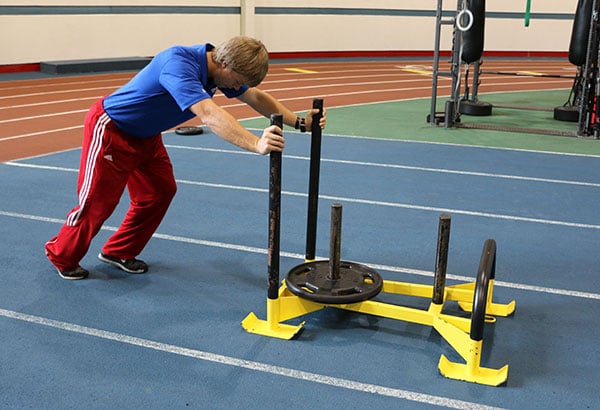
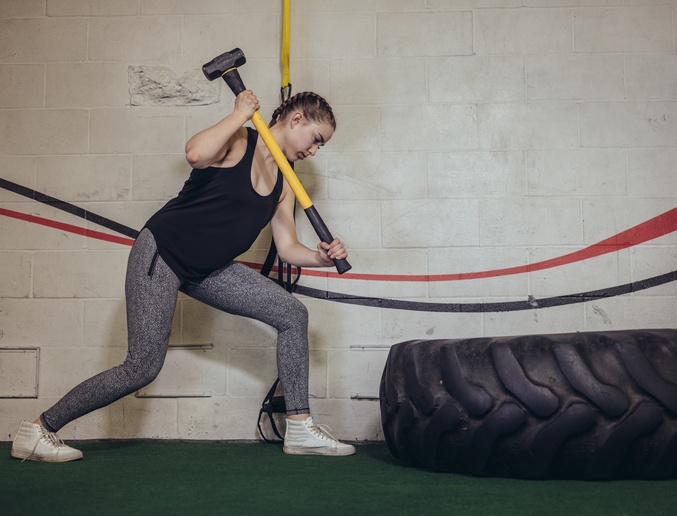
The exercise you can do at NIFS that mimics this movement most closely is the Prowler Sled Push. There are many sled options to choose from, but this one allows you to start in a standing position and requires you to physically push the weighted sled (no attachments needed). This can be done in several ways: heavy weights for short distance and lighter weights for longer duration as well as sprints. For a great partner routine, relay races are a perfect way to give you and some friends exercise and breaks. Have one person push the sled, while the other two are on the “ends.” As the sled approaches, the next person takes the sled-pushing responsibility and pushes it back to the starting point. This continues until a certain distance is reached or for time. Try to mark a 30-yard distance and continue this exercise for 2–3 minutes for one set. Be sure to enjoy your rest times!
***
Whether you are looking for a new routine or really are dreaming about the Olympics, these three exercises are sure to give you a great workout. If anything, we can appreciate the hard work and dedication it takes to become an Olympian. For more fun fitness ideas, check back to the NIFS blog and social media outlets (YouTube, Instagram, Facebook, Twitter). Until next time, friends, dream big! Go for gold!

This blog was written by Thomas Livengood, Health Fitness Instructor and Personal Trainer. To read more about the NIFS bloggers, click here.
 Every couple of years, the world’s best athletes get to compete in either the winter or summer Olympics, and I have been wondering about what they eat! I know as a dietitian I am obsessed with food, but surely other people wonder about sports nutrition on this kind of scale, too. These elite athletes have a routine when it comes to their nutrition, especially before competition. Then they are put into a situation where they have a giant smorgasbord of choices in the Olympic Village. How hard it must be to try to stick to their plan…at least until their event is over.
 Like most people, I’m busy: full-time job, kids, a house… and in my “spare time,” I’m a high school tennis coach and play a lot of tennis. A few years back I started having issues with exhaustion (go figure). Right around 4pm I would just be overcome with complete, hit-the-couch, exhaustion. The only way to make it through the rest of my busy day seemed to be one more caffeinated drink.
 I love what I do…seeing people succeed with their weight-loss goals is one of the most rewarding feelings as a dietitian. However, it can also be very challenging when I see clients revert back to old habits and struggle to keep the weight off that they worked so hard to remove. While this is a common struggle for many, there are small steps that you can take to try to prevent this from happening.
 Greetings NIFS friends! Hopefully your New Year’s resolutions are keeping you more active at the gym and less active at the buffet line. All joking aside, getting back to the gym can be challenging, especially if you are not sure what to do when you get there or if you are burnt out on cookie-cutter workouts that are barely working anymore. With that being said, introducing new equipment, ideas, and strategies can be a daunting task. Don’t let that get you down, though, because we are here to rescue your workout!
 I have been in a gym environment of some kind for the majority of my life, first as a student athlete through adulthood and now as my profession. There really hasn’t been a time in my life when I haven’t been a part of the gym culture. There is a reason for that: I LOVE IT! I love to move, push myself beyond perceived limits, see successes, be around likeminded people, and witness amazing transformations and feats of strength. There is nothing like it, and I have done a great deal of growing up in a gym, and now it is my livelihood, literally.
 Our Group Fitness Class of the Month is going to PUMP (*insert handclap) you up!
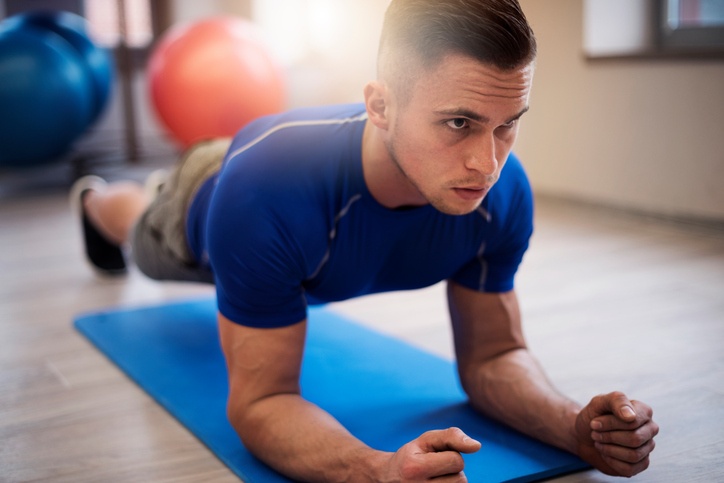 Some of the number-one fitness goals are to strengthen the core, lose belly fat, and get six-pack abs. These are all pretty good goals that can be addressed by a fitness professional and a dietitian, but everyone might not have that luxury. From a traditional perspective, we have mainly used a few ab exercises such as crunches, sit-ups, and variations of them. For the most part, these are better than the alternative—nothing at all.
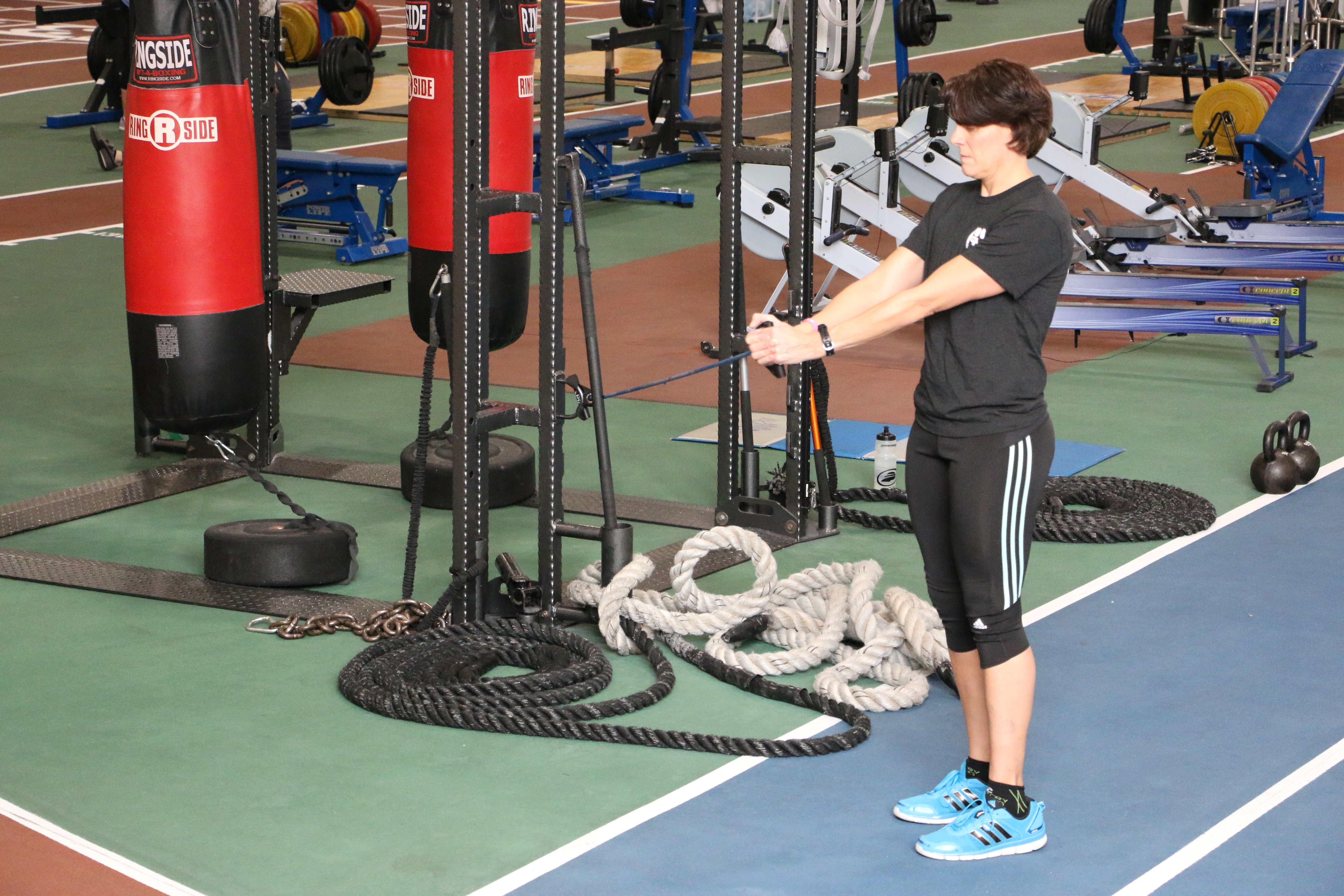 Anti-rotational holds: Using either a cable machine or bands, stand perpendicular to the anchor point while holding your handle directly in front of your midpoint. To increase the intensity, I suggest introducing a kneeling or half-kneeling position, making the core work even harder.
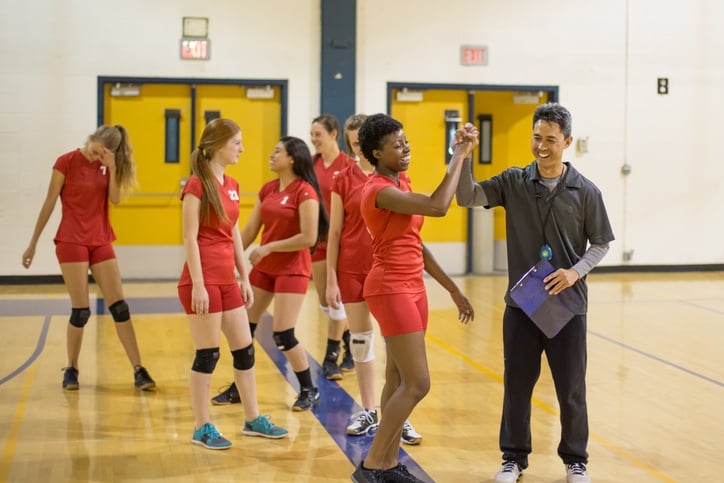 For many adults, memories of physical education class are usually one of two greatly different experiences. For me, physical education was the highlight of my day and was never a burden or stressor in my life. For others,