<img height="1" width="1" style="display:none" src="https://www.facebook.com/tr?id=424649934352787&amp;ev=PageView&amp;noscript=1">

NIFS Healthy Living Blog

Small Group Training EXPRESS: Get a 30-Minute Strength Workout

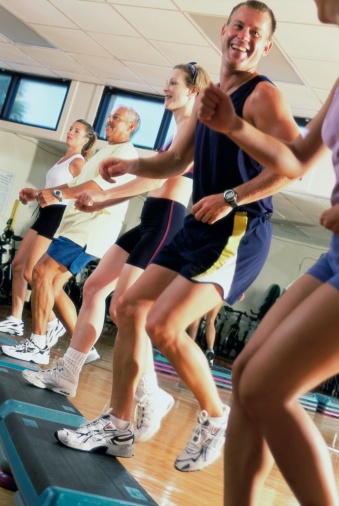
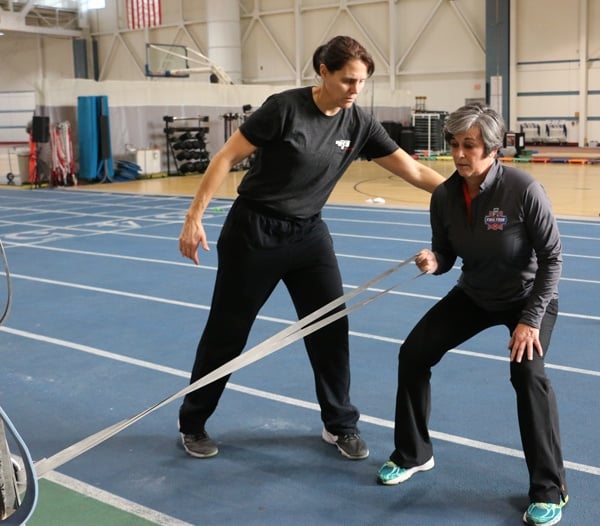
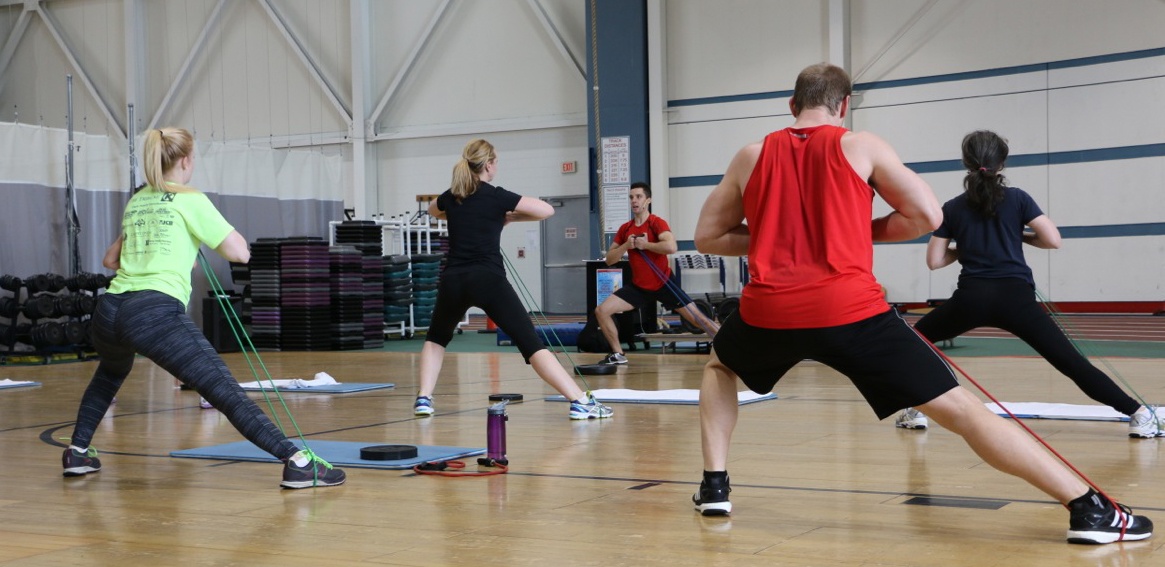
GT class.jpgHave you ever wanted to try out small group training? If you’ve wanted to but have never taken the step to do so, maybe you share some of the same concerns as many others. A common concern that I often hear is that working out for a full 60 minutes is not currently your cup of tea because of your schedule or fitness level. Maybe you have seen people in SGT workouts before and you don’t feel up to that level. Or maybe you just haven't gotten around to it yet.

If any of these things strikes a chord, I have something that might be in your future. I am excited to announce that I have started small group training EXPRESS! This express-style group training will offer the same benefits as regular group training and a similar format, but for 30 minutes instead of 60!

GT_Express-logo.jpg

Here are the top 3 reasons I think you should try it.

1. The 30-Minute Format Is Perfect for Those Shorter on Time

SGT EXPRESS is only 30 minutes! That is 2.08% of your day. You get to the gym, get in a great workout with the perk of training with others, and before you know it you are finished. I think some days short and sweet workouts are all you need. I know some may be thinking, 30 minutes, is that even worth it? The answer is yes! You will still benefit from a 30-minute workout. During this half hour, we will simply maximize every minute instead of spanning it over an entire hour. So don’t let the shorter time keep you from trying it. Also, this class is offered during the lunch hour, perfect for squeezing a workout into your busy day and clearing your mind before getting back to work.

2. Get in That Much-Needed Strength Workout

If you have only 30 minutes to work out, many people don’t think they can squeeze in a good strength session, so they go on a run instead. With SGT EXPRESS, you will get that total-body strength workout that you need to get in for the week. No need to think about what you can squeeze in; the workout is already planned for you. A typical SGT EXPRESS workout will consist of a warmup, core/power movement, a strength portion, and a finisher to leave you walking out knowing that you had a great workout.

3. All Fitness Levels Are Welcome—and the Group Setting Will Give You Motivation to Push Yourself

SGT EXPRESS is for a beginner or a veteran of exercise. All exercises have different progressions that can easily be adapted to meet any fitness level. I will coach you in choosing what works best for you. Training in a group setting also brings out most people’s competitive side. The group will help you push yourself harder than if you just came in for 30 minutes on your own. Don’t let the SGT part of it scare you away.

***

Try your first SGT EXPRESS session led by trainer Kaci Lierman FREE! Contact Kaci at klierman@nifs.org for more information.

Like what you've just read? Click here to subscribe to our blog!

This blog was written by Kaci Lierman, NIFS Personal Trainer. To read more about the NIFS bloggers, click here.

The Hidden Wellness and Fitness Benefits of Yoga

Yoga WelnessMany of us know that yoga serves as a form of physical activity that increases flexibility for participants. Yoga focuses on putting the individuals in body poses that elongate muscles from head to toe. While this is very true, and I encourage anyone looking to improve their flexibility to incorporate yoga into their weekly workout routine, yoga has so much more to offer than just improvements in flexibility. In fact, the original context of yoga had very little to do with improving flexibility at all.

Originally the purpose of yoga was spiritual development practices to improve mind-body awareness. Over the years, however, many have begun to focus more on the physical benefits of yoga than the mental and spiritual benefits, which has led the practice of yoga to take on newly defined purposes. However, it is important to understand the mind-body awareness benefits of yoga, as they can be just as if not more beneficial than the physical attributes. Let’s take a look at what some of those hidden benefits are.

Nervous System and Digestive System

One major focus of yoga is to become more aware of and to control your breathing patterns. By learning to control breathing, you can move from the sympathetic nervous system to the parasympathetic nervous system almost instantaneously. The sympathetic nervous system is responsible for the “fight or flight” response, or the part of your nervous system designed to respond to stress. When the sympathetic nervous system is in control, heart rate and blood pressure rise as a response to fight a possible threat. You want to limit the activity of this side of the autonomic nervous system. This is important because when the parasympathetic nervous system (or rest and digest) is in majority of control, your heart rate, blood pressure, and stress levels lower while your digestion rate increases. Once your body reaches this relaxed state, anxiety becomes something of the past. A faster digestive system helps your body make the most of nutrients found in the food you consume while regulating regular bodily function.

Focus and Creativity

If you ask an experienced yogi what the hardest part of yoga is, you might be surprised by their answer. Typically, one might assume that holding the different yoga poses would be the most challenging aspect; however, there is an even bigger challenge, which includes focusing—on nothing. Meditation is another crucial component of a successful yoga session. Experienced yogis are able to focus their attention on nothing but their inner self; all outside distractions are eliminated, at least temporarily. This may sound very simple, but if you have ever tried to completely clear your mind of all inner thoughts besides what you are feeling at that exact moment, you may be able to grasp how difficult a task this is to successfully complete.

However, once one is able to control their center of attention, they will find their ability to stay focused on one particular task (especially those that require attention to detail) becomes better and better. In a 2012 study published by the journal Frontiers in Psychology, researchers were able to determine those who practiced meditation for at least 10 minutes a day for up to 16 weeks performed better with divergent-thinking tasks than those who did not participate in meditation at all.

Strength and Muscle Definition

Just in case you are not fascinated by the mind-body awareness benefits of yoga, there is a less discussed muscle defining and strengthening benefit as well, for those who are solemnly interested in the physical benefits. Who knew that yoga is actually great for improving muscle definition, and in rare cases even muscle hypertrophy? Because yoga focuses on moving and upholding your own body weight in various positions, it serves as a great strength workout in addition to flexibility and mind-body training.

Unlike traditional resistance training, which focuses primarily on the concentric contraction (the muscle contracts as it shortens) of a muscle, yoga focuses primarily on the eccentric contraction (the muscle contracts as it stretches) of a muscle. The eccentric contraction component gives muscles a more elongated look, while concentric contractions give muscles a shorter, more bulgy, look. If you have ever seen an experienced yogi’s physique, it may resemble that of a gymnast, basketball player, or even a track athlete versus those who participate in more traditional forms of resistance training, who might resemble a football player or bodybuilder with more muscle hypertrophy.

Yoga tends to train small and large muscles all over the body due to its high demand for muscles to work in conjunction with each other to perform the different body movements in various planes of movement. This is good for the reason that you often tend to work smaller muscle groups that may get little to no attention when practicing machine-oriented resistance training. With a machine that focuses on a one-dimensional plane of movement, it’s often impossible to train multiple muscle groups at the same time. Therefore, yoga tends to be a better option for improving overall body strength along with achieving a more proportional muscular physique.

Other Wellness Benefits

Some additional notable benefits of yoga also include (but are not limited to) immune system boost, pain management, increase in gray brain matter and increase in balance, and function ability. As noted above, the mental and nervous system benefits of yoga must begin to take back priority. Although improving flexibility can be a great thing, many have found that these additional benefits are what separate this form of physical activity from any other form.

Like what you've just read? Click here to subscribe to our blog!

This blog was written by Darius Felix, Health Fitness Instructor. To find out more about NIFS bloggers, click here.

Topics: yoga muscles focus flexibility digestion wellness nervous system mind-body

Would Metabolic Testing for Fitness Benefit You?

Hello NIFS friends! Today’s fitness world is ever evolving with new equipment, exercises, and technology. Our society, generally speaking, is one that feeds and thrives off information and numbers. That being said, how can we make something that is as simple and stripped down as running on a treadmill, basic nutrition, and the ever-so-popular “lift things up and put them down” more informative so that the exercising individual has the opportunity to quantify their progress and results?

We know the BOD POD and Fit3D are great assessments for this, but metabolic testing can take it one step further. Metabolic testing can really be a game changer for many. Two tests that stand out: one that tests your VO2 Max (the efficiency of your heart and lungs to use oxygen as you exercise), and the other being the Resting Metabolic Rate Test (RMR—how many calories your body burns in a day at complete rest and prior to exercise).

VO2 Max Testing

Screen Shot 2017-07-27 at 1.51.09 PM.pngVO2 Max testing is a test to quantify the efficiency of your heart and lungs during exercise. Why is this important? An athlete who wants not only to improve times, but also to see if their training is effective, can find training zones (based on their testing) and progress based on specific training over time.

The test is usually done on a treadmill or bike and takes roughly 20 to 30 minutes. It isn’t for the faint of heart. To get optimal results, we need for you to be able to “max out” your abilities and do so without any other limiting factors (previous injuries, medications, and so on). For people who are unable to do a VO2 Max test, we highly recommend the alternative Sub Max VO2 test, which can accommodate a wider range of people looking for similar results.

RMR Testing

Screen Shot 2017-07-27 at 1.51.52 PM.pngFor individuals who want to know how many calories they burn in a day (their metabolism), the RMR test is your main tool to finally take off the blindfold and know exactly how to budget your calories to match your goals, whether it is weight loss or weight gain.

Most likely, if I were to ask someone on the street how many calories they burned today, they would not be able to give an accurate answer. If this were the case, how would you know how many calories to eat to see the results you desire? Activity trackers do a decent job, but they still use plenty of estimations, which leaves even more guesswork. A doctor’s advice can be useful, but they still are limited in what they know about your body. The RMR test, again, takes away the guesswork and gives you a real number to base your nutrition from. Unlike the VO2 Max test, anyone can benefit from the RMR testing.

***

To recap, you are serious about your health but want more information that can make you better, right? You want to get the most out of your time in the gym, correct? You want to feel good and look even better? We have the information you need with the VO2 Max test and RMR test. You may ask, “Are these tests right for me?” The answer can be found by simply talking to one of the Health Fitness Specialists in the NIFS Fitness Center, NIFS’s Registered Dietician, to discuss what is right for you. VO2 Max testing and RMR testing are by appointment only; we hope to see you soon.

Muscleheads rejoice and evolve!

Like what you've just read? Click here to subscribe to our blog!

 This blog was written by Thomas Livengood, Health Fitness Specialist. To read more about the NIFS bloggers, click here.

NIFS VO₂ Max Test and RMR are products by KORR™. Images provided by Korr™.

Topics: fitness center Thomas' Corner metabolism assessments fit3d vo2 max

Stand-up Paddleboarding: a Watersport for Fitness

ThinkstockPhotos-175923466.jpgThis is a great time of year to get out and do some fitness activities that you do not get to do year round, living in an Indiana climate. As the weather turns, the opportunity for some watersports becomes more realistic. While there are many different things you can do for exercise on the water like kayaking, canoeing, and swimming, my all-time favorite outdoor activity is paddleboarding. The benefits of stand-up paddleboarding (SUP) are vast, and this activity has gained some serious traction over the past 5 years.

Benefits of SUP

  • Great total-body workout: I remember the first time I saw someone paddleboarding. I thought, “Well that looks nice, relaxing, easy, and not intense!” It wasn’t too long afterward that I realized it was the opposite of that! It is relaxing; however, it is also work, depending on your total time, distance covered, and pace. SUP works your entire body from your toes gripping the board, your legs and core keeping you balanced, your arms and back from paddling, all the way to the tips of your fingers as they grip the paddle.
  • Improves balance: SUP requires core stability and leg strength to keep you balanced on the board and able to stand. Balance is one thing that you will notice you need immediately; otherwise you will be in the water in a matter of seconds. While I wouldn’t say that it’s particularly hard to balance on a paddleboard, you do need to keep your center of gravity low and your body needs to be positioned in the right spot on the board.
  • Low impact: If you are looking for a great alternative to give the joints a rest from running or other high-impact training, SUP may be just the thing to try. This is definitely a low-impact activity with many of the same benefits as others like swimming and biking.
  • Improves overall strength: After spending a few hours out on the lake on a paddleboard, you might feel pretty good. But the typical muscle soreness that you feel after a workout becomes very real the next morning. When paddleboarding, you are using a lot of the smaller muscles that you don’t typically use, causing them to be sore the next few days. Some of these things include sore toes or feet from gripping the board, sore glutes because you are in the bent-knee position for quite some time, and sore muscles in the shoulder and back from paddling (not a frequent motion).
  • Cardio workout: SUP can be a cardio workout depending on the intensity of your time out on the water. You can make SUP pretty fun by incorporating some races into your plan, which will get your heart rate up.
  • Reduces stress: There is something peaceful about being out on the water, and I am not really a big nature person. Being on the water and looking at the sights around you helps you relax and reduce stress. And for those who really want to take this to the next level, you can try paddleboard yoga at Eagle Creek!
  • Great social activity: If you can get a group of people together to go out on an afternoon trip, it makes paddleboarding all the more fun. Find a small island or shoreline you can paddle to and spend some time swimming and just relaxing in the sun.

Where to Try SUP in Indianapolis and Elsewhere

If you haven’t had the opportunity to give SUP a try, I would encourage you to find some time to do so. You can rent paddleboards at Eagle Creek, or if you are on vacation near some water, look up a few places. SUP is and activity that you can try once to get the hang of it, and then go out again and really enjoy it!

Like what you've just read? Click here to subscribe to our blog!

This blog was written by Amanda Bireline, Fitness Center Manger. To read more about the NIFS bloggers, click here.

Topics: fitness cardio balance strength total-body workouts paddleboarding watersport low-impact

Focus on Fluids: Summer Hydration Made Easy

ThinkstockPhotos-586741530.jpgFluid (mainly water) is needed by all body cells for function. Water helps to regulate body temperature, carry important nutrients and oxygen to cells, remove waste, lubricate all joints, and protect organs and tissues. Our bodies are composed of approximately 67 percent water. As summer approaches and the temperatures increase outside, it is important to make sure you are taking in enough water.

How Much Fluid Do You Need?

So how much do you really need to be drinking each day?

  • Drink at least 8–12 cups of fluid each day (1 cup = 8 ounces).
  • Drink 2–3 cups (16–24 oz) of fluid about 2–3 hours before exercising.
  • Drink 1 cup (8 oz) of fluid 10–20 minutes before a workout.
  • Drink 1 cup (8 oz) of fluid every 10–20 minutes during exercise.
  • Drink 2–3 cups (16–24 oz) for every pound of body weight lost during exercise.

Infuse Your Water with Flavor

I often hear that water is boring or that many don’t like it, so that is the reason individuals are reaching for soda, juice drinks, or other high-calorie beverages. However, the best option for hydration and decreasing unnecessary sugar intake is still to consume water.

  • Here are a few combinations that you can add to a cup of water or sparkling water for a fun, flavor-filled drink that is not so boring!
  • Watermelon and jalapeño
  • Lime and basil
  • Apples and cinnamon sticks
  • Strawberries and basil
  • Raspberries and pineapple
  • Blueberries, lemon, and mint
  • Peach and mint
  • Cucumber, melon, and mint

Monitor Your Hydration

On a final note, a simple way to monitor your hydration status on a daily basis is to monitor the color and frequency of urination. Continue drinking fluids until you are urinating approximately every 2–3 hours. When your urine is a pale color, you can be confident that you are adequately hydrated. If you are urinating more frequently and/or your urine is clear, you are drinking too much. If you are urinating less frequently and/or your urine is dark in color, you are probably dehydrated and really need to increase your intake of water.

So drink up!

Like what you've just read? Click here to subscribe to our blog!

This blog was written by Angie Mitchell, RD, Wellness Coordinator. To find out more about the NIFS bloggers, click here.

Topics: summer hydration water

NIFS July Group Fitness Class of the Month: BODYCOMBAT

BODYCOMBAT 2021_2Have you ever considered that punching and kicking is a form of exercise and fitness? Look no farther than the physique of boxers and fighters. And from time to time, we all need to do a little punching and kicking. In fact, not only is it a form of exercise, but you can burn a ton of calories doing it! If you like this type of stuff and are into different forms of mixed martial arts, you should really consider giving BODYCOMBAT™ a try.

This Les Mills class, will allow you to become more physically fit, faster, and stronger in less than 60 minutes. According to Les Mills, research shows that with a simple 55-minute class, the average caloric burn is 737! The class, inspired by mixed martial arts, is a cardio-based workout using just your body as the machine.

What to Expect from This Group Fitness Class

When taking BODYCOMBAT™, you can expect a whole lot of kicking, punching, and throwing elbows and knees (at the air, of course, and not at another class participant!). The class is a combination of kicks that work the lower half of the body, and blocks, strikes, and punches that are designed to work the upper half of the body as well as the core.

Who Is It Good For?

Everyone! For those who are looking for a cut upper body, BODYCOMBAT™ uses rapid boxing-style upper-body movements that work the fast-twitch fibers of the muscle. These fast-paced movements contribute to the “fit” upper body more than a traditional strength training workout that works more of the slow-twitch muscle fibers. Or maybe you are looking to become faster and more agile. BODYCOMBAT™ will help to improve your sprint time, jumping ability, and dynamic movement.

If you are looking for a different way to get more physically fit, this group fitness class of the month may be it. Discover the vast benefits of boxing and fighting—but without the black eyes, facial lacerations, and missing teeth!

To access the full group fitness schedule at NIFS, click here! Not a member? No problem! Click here to get a free class pass and try BODYCOMBAT™ on us!

Like what you've just read? Click here to subscribe to our blog!

This blog was written by Amanda Bireline, Fitness Center Manager. To read more about the NIFS bloggers, click here.

Topics: cardio fitness center group fitness workouts core Les Mills Group Fitness Class of the Month BODYCOMBAT martial arts

NIFS Personal Trainer Takes on a Triathlon Challenge

Crystal-1.jpgOne of my greatest passions is health and fitness. It has always been a part of my life, from studying it in school to choosing it as my career path. This year I have decided to try something that I have not done before: a triathlon! I’m excited to share with you my career as a personal trainer and health fitness instructor and my journey in training for the Indianapolis Go Girl Triathlon that will take place August 17.

Taking Time to Achieve My Own Goal

As a fitness professional, one of the ways that I measure success is when I’ve helped an individual or group reach their goals. Knowing that others obtained their dream is more rewarding than reaching my own personal goals. Getting to know a client’s strengths and weaknesses, and guiding them to overcome hurdles that they never thought they could achieve, is so gratifying. As a client seeks my advice and help, I believe it’s just as important that I practice what I’m teaching while working to connect it to current research and trends in the fitness and health realm. With all these different things on my plate, sometimes my own training and goal achievement gets pushed aside.

When considering what my own personal goals were for this year, I decided it was time I took on a new challenge for myself, completing my first ever triathlon. At first, the idea intimidated me because several thoughts came to mind:

  • “That’s a lot of cardio.”
  • “What if I drown in the open water?”
  • I’m not a swimmer.”
  • “I can’t even float.”

I instantly felt afraid, and the thought of a new challenge that I’d never considered doing crept up on me. On the other hand, that’s what also has enticed me to take on this race. Doing something that I’ve never done before actually excites me, and it’s what pushed me to make the decision to give it a try. I have decided to fully accept that challenge and have a coach help lead and guide me to reach my goal.

The Impact of Attitude

In addition to my adventurous and ambitious personality, the experience of surviving leukemia as a child has allowed me to take a look at life from a different perspective—a second opportunity in this world. I believe that your mind is one of the most powerful influences on your daily decisions; what you feed your mind, your thoughts, self-talk, “fight-or-flight” reactions, and which outside influences you believe all play a part in who you choose to be on a daily basis. The bottom line is this: When you tell yourself you can or can’t do something, you make that decision right then and there, because it all comes down to your will to take the next step outside your comfort zone and take action.

I look forward to sharing with you my experience of taking on this challenge and training for a triathlon, and I encourage you to follow my series on this blog.

Like what you've just read? Click here to subscribe to our blog!

This blog was written by Crystal Anne Belen, personal trainer and health fitness instructor at NIFS. To read more about the NIFS bloggers, click here.

Topics: NIFS triathlon nifs staff challenge Indianapolis goals personal trainer

You’ll Never Do a Marathon? Five Reasons to Join Group Training

Some people really love to run; some don’t. For those who do, running is so much more than just getting in a few miles to check “workout” off the list. It can be a social hour and a stress reliever; it can be therapeutic, present a challenge to take on, and help people step away from the mundane routine of waking up, going to work, coming home, and repeat!

ThinkstockPhotos-622035786.jpg

Now for those who do not enjoy it, when you see all the promotions to sign-up to race you think, “Why on earth would I want to pay to run 13.1 or 26.2 miles? I don’t even want to bike or drive that far; why would I run that far?” Let me share with you five motivations to consider giving it a shot.

  1. Raise money for a charity: This has grown in popularity over the last five years or so and is a great reason to sign up for a half or full marathon. If for no other reason at all, find your favorite charity, get some people to sponsor each mile you run, and when you finish you can joyfully donate that money to the charity of choice. I can’t think of any better reason to put in time than to do it for a cause or in memory of someone.
  2. Inspire others: Others are always watching each of us, whether or not we realize it. Maybe it’s your kids, your spouse, or your best friend, but someone out there admires you. By turning your focus from yourself outward, you may inspire someone to do something that they thought was virtually impossible.
  3. Stretch your limits: When is that last time you really pushed to see just how much you could do? If you have not experienced a full or half marathon, trust me when I say it can really stretch your limits. Maybe running this distance is something you have never imagined yourself doing. I assure you, you will run all the way to the point that you thought you could go, and then you’ll run right past it! Training for a distance race will absolutely push your limits, but it will also leave you feeling a huge sense of accomplishment afterward.
  4. Meet new people: It’s really fun to be part of the running community. Training for an event like this takes a great deal of time and effort, and I can assure you that you will make some lifelong friends in a running group. Seriously, try it; next thing you know you will be traveling to other states to run together!
  5. Learn your body’s capabilities: Sometimes we think we have hit the peak of what we can do, and we really understand what our bodies can physically handle. I challenge you to try running a half or full marathon. You will define new boundaries of what you are capable of. It’s truly amazing to think about what the body can sustain through training when done properly.

I hope that something on this list has hit home for you. Take a step past what you always thought was impossible or maybe just not very smart, and get yourself signed up for a race. We would love to have you come and train with us, too!

This blog was written by Amanda Bireline, Fitness Center Manager. To read more about the NIFS bloggers, click here.

Topics: NIFS motivation running marathon training group training half marathon marathon fall

Short Sleeps, Big Benefits: What a Power Nap Can Do for You

ThinkstockPhotos-530249969.jpgCan you remember preschool when the teacher would turn down the lights and break out the cots? Nap time! You might not have had that exact experience, but as humans we are prone to napping. In our go-go-go life, time is money. To society, sleeping during the day is seen as a luxury that we cannot provide ourselves, and is usually thought of as a sign of laziness.

Unfortunately, napping doesn’t pay the bills. Even so, many physicians as well as wellness-oriented CEOs have championed the idea that a little afternoon snooze is actually beneficial, and can not only provide enough rest to fight off fatigue, but improves your alertness, improves motor learning skills, boosts memory, and enhances creativity (Soong, 2010). Can napping actually make you a better employee at work, give you better results in the gym, or enable you to have a better social life with your family and friends? Yes, in fact, it can! Here is a closer look at napping and its benefits.

What Is the Optimal Nap Length?

First, I’d like to break down naps into two parts. The duration of nap that you are taking will be specific to you, but there is information that gives a good indication that for optimal power naps, 10 to 20 minutes of sleep will provide the best results. Longer naps can make you groggy; this is known as sleep inertia (Dvorsky, 2013). The longer naps, such as a 60- to 90-minute siesta, can put you in a state of REM (otherwise known as our dream state). There are some links to cognitive function associated with longer naps, but the time frame doesn’t always work with our hectic schedules.

When Is the Best Time to Nap?

The second part deals with necessity. Our naps can be planned, in which you know you are going to need extra rest for a long night, so you take a nap. Another would be an emergency nap, where you take a nap because you otherwise would have put yourself in a dangerous situation (think about getting sleepy behind the wheel and then deciding it’s best to pull over at a rest stop for a nap). Then there is the always popular appetitive napping—in other words, taking a nap for the sheer enjoyment of it (Dvorsky, 2013).

What Are the Benefits?

Your health and wellness can benefit from a simple, short nap. At the right length, your nap can provide much-needed alertness, mental capacity, creativity, energy, reduced stress (in turn reducing the risks of heart disease), and more effective learning abilities for children. With all these positives attached to something that can be done quite simply, it’s hard to understand why anyone would not take more naps. For businesses, your employees would be better workers with higher productivity; for teachers, your students would have a better chance of learning; and for you, your overall well-being would be improved. Don’t wait; take a nap TODAY!

Like what you've just read? Click here to subscribe to our blog!

This blog was written by Thomas Livengood, NIFS Health Fitness Instructor and Personal Trainer. To read more about the other NIFS bloggers, click here.

Topics: stress Thomas' Corner employee health sleep productivity heart disease wellness naps memory

Powerful Student Athlete Summer Strength and Conditioning Alternatives

Student athletes are home for their summer vacations. Some may spend a few weeks there and head right back to campus, while others might not return until the beginning of the school year in August. With them, they bring all of their necessities (furniture, clothes, etc.) from their dorms or apartments back to their homes, with the most important necessity to these athletes being their summer workout manual. This will be their strength training and conditioning guide for potentially the next 3–4 months. Simply put, these documents are critical for preparing their bodies for the upcoming season.

For me, getting the strength and conditioning manual from our coaches for the summer was always pretty exciting. Training was always something that I looked forward to doing (minus the 110-yard sprints for our conditioning test). I knew that as soon as we got back to campus, football season was only a few weeks away, so this was going to be really important.

What Happens if You Don’t Have the Right Equipment Back Home?

The biggest challenge that I faced during the summer months wasn’t necessarily due to the workouts themselves, but finding alternatives to exercises that were in our packets that fit with the type of equipment that I had access to. There were not a ton of training facilities in my hometown, and none of them had areas to do any type of Olympic lifting. They were more of the commercial-style gyms which would have only the basics (dumbbells, fixed bench-press racks, Smith machine, etc.). So training for any type of power or speed-strength with resistance was going to be a challenge. Luckily, I was a young Exercise Science major who saw this as a challenge and a way to learn and adapt to a less-than-ideal training environment.

A similar situation came about a few weeks back when I distributed the summer workout packets to all of my teams. One of my athletes contacted me and explained to me essentially the same situation that I was in from 2007 to 2011. She has access to a gym, but the facility does not have an area to do Olympic lifts, which are a staple in her team’s programming. Luckily, I understand much more now than I did back in my undergraduate years, which makes developing these alternatives easier.

Four Lifts and Their Alternative Exercises

Below you will find four common explosive lifts followed by an alternative weight-lifting exercise and a few tips on how to do them.

Snatch: Single-Arm Dumbbell Snatch

  • Dumbbell starts in front of your body with wrist facing outward.
  • Hinge forward at the hips to lower the dumbbell toward the floor.
  • Drive through the floor with your feet and jump straight up while simultaneously pulling the weight upward with a high elbow then punching it toward the ceiling.
  • Sink underneath the weight and control the catch.
MVI_8960


Clean: Dumbbell Clean

    • Start with two dumbbells outside hip-width with wrists facing outward.
    • Hinge forward at the hips to lower the dumbbells toward the floor.
    • Drive through the floor with your feet and jump while pulling the weight upward.
    • Snap the elbows underneath the weight.
    • The dumbbells should rest on your shoulders with elbows high upon completion.
MVI_8964


Jerk: Landmine Jerk

    • Start with a bar placed in a landmine attachment or supported by a corner wall with weight plates.
    • Start with feet parallel and bar close to the shoulder that you are pressing with.
    • Dip your hips slightly and jump up.
    • Split your feet so that the front foot is opposite the arm that you are pressing with and punch the weight upward.
    • Stick the landing.
landmine jerk


Box Jump: Landmine Squat Jump

  • Start with the bar placed in a landmine attachment or supported by a corner wall with weight plates.
  • Start with feet at hip width with the end of the bar slightly out in front of your body.
  • Squat and drive through the floor.
  • Jump as high as possible.
Landmine Squat Jump


These four variations on four common power exercises will give you some flexibility if the space you have to train in is tight or if equipment is limited. They could also serve as an alternative for some of you who are looking to switch up your program for a few weeks without completely straying from these exercises. As with many of the Olympic lifts, repetitions should be kept relatively low so that you can focus on being as explosive as possible. Have fun and get after it!

Like what you've just read? Click here to subscribe to our blog!

This blog was written by Alex Soller, Athletic Performance Coach and NIFS Trainer. To find out more about the NIFS bloggers, click here.

Topics: NIFS fitness center equipment summer weight lifting student athletes strength and conditioning